
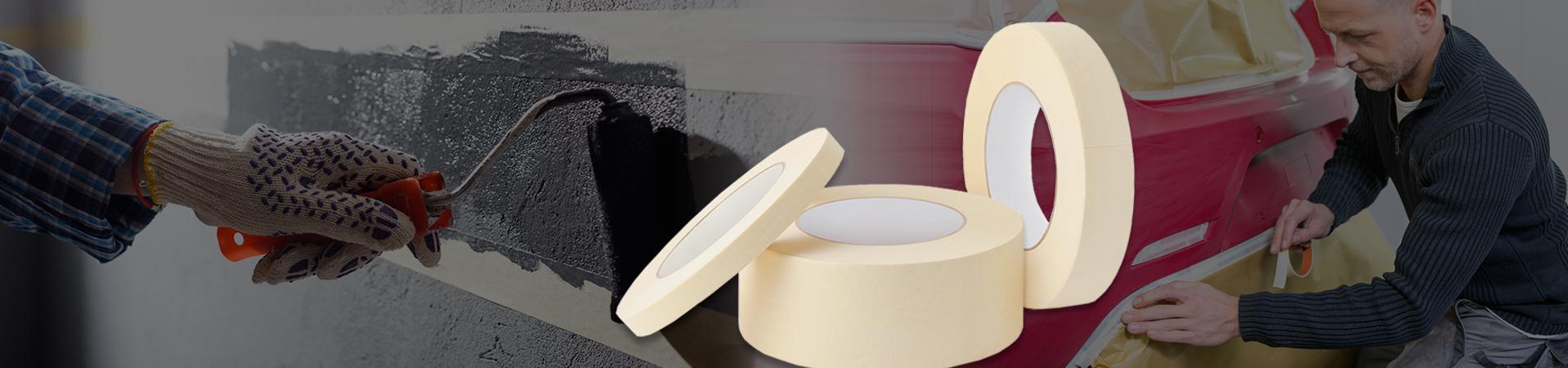
Not only will this brighten your mood, but it's also a good investment – especially if you're planning to sell during the spring housing market. A freshly painted interior will help the house show better to prospective buyers.
Whether you plan to do-it-yourself or you're a longtime pro, you'll need to make some decisions about the type of painters tape to use. Your choice will depend upon the type of surface being painted, whether it's indoor or out, and any creative or artistic requirements.
Here's a quick primer to help you choose the right painters tape for your project. And don't forget to check for removal tips at the end of this post.
Why use painters tape and not other types of tape?
Unlike other types of masking tape, painters tape is specially designed for painting applications where clean removal is a requirement including in cases when the tape is exposed to direct UV light. It can be used on glass, vinyl, metal, wood, painted walls and trim.
There are several types of painters tape, and which one you choose depends upon the job you need it for.
Protect floors and furniture
As you prep your room for painting, you'll want to keep floors and furniture from getting hit by paint drops. You can drape your furniture with old bed sheets and cover floors with plastic sheets, but as you paint, these can shift, inadvertently exposing the edges of furniture or leaving spots on floors.
Create Crisp Lines
Once you've got floors and furniture protected, it's time to prep the baseboards, walls and ceilings. Painters tape can be used as a guide to keep lines straight and protect surfaces from getting spotted with the wrong color.
If you're painting a newly constructed house or an addition, you will probably be painting drywall. Masking tape is a good choice because its peel adhesion does not increase with time, allowing for removal from a wide variety of surfaces without damage.
Tips for Delicate Surfaces
Delicate surfaces, such as wallpaper, freshly painted or unpainted wallboard and drywall, ceiling tiles, or masking for faux finishing, will require a lower adhesion tape.
Creating Wall Designs
Painters tape also can be used to create paint designs on walls, furniture and other surfaces.
Taping Textured Surfaces
It can be tricky to create sharp lines on textured surfaces such as heavy knockdown, light knockdown or orange peel, without bleeding.
Removal Tips
When all of the painting is done, it's time to remove the tape. Here are a few tricks to make sure it all comes off smoothly.
- Remove tape as soon as you are finished.
- Score the edge of the tape with a razor blade first.
- Pull the tape slowly and at a 90 degree angle.